
How Startups Can Reduce Operational Costs Through Open-Source Technologies
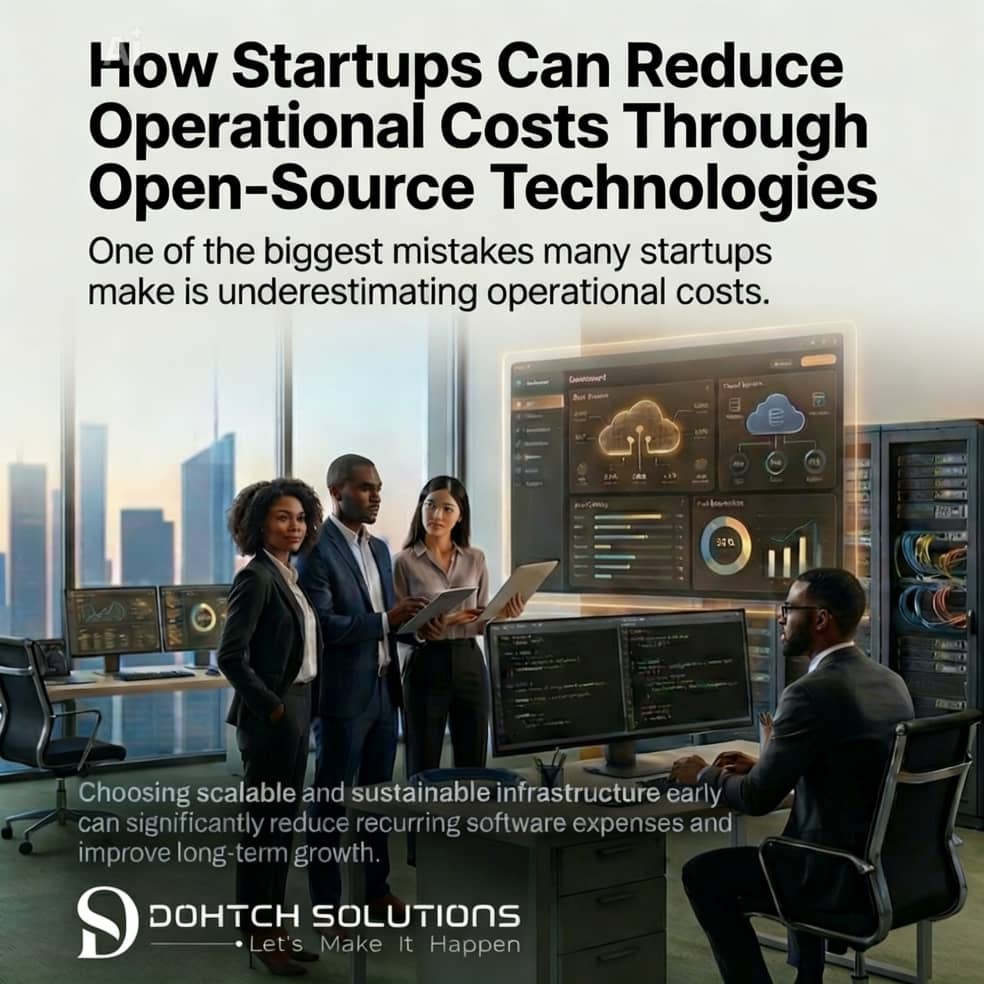
One of the biggest mistakes many startups make is underestimating operational costs.
INTRODUCTION: In the early stages, most founders focus heavily on building products, acquiring users, and raising capital. But as the company begins to grow, recurring software expenses quietly begin to pile up in the background. The challenge is that many startups adopt expensive software simply because it is popular not necessarily because it is the most practical or sustainable option for their stage of growth. What makes this even more interesting is that many startups eventually find themselves spending more money maintaining tools than improving products. For startups, this presents an important question: How much operational cost can be reduced by choosing the right infrastructure from the beginning
This is where open-source technologies have become increasingly important.
Modern open-source tools now provide startups with reliable alternatives for communication, infrastructure, storage, DevOps, databases, and security often at significantly lower long-term costs.
This article explores some of the major operational areas where startups spend the most money, and how open-source technologies can help reduce those expenses by building more sustainable and cost-efficient systems.
Communication & Collaboration
Communication tools are often one of the first recurring expenses startups adopt.
As teams grow, platforms like Slack, Microsoft Teams, Zoom, and Google Meet can become surprisingly expensive because most pricing models scale per user.
For small teams, this may seem manageable. But for growing startups, collaboration costs increase quickly over time.
Open-source alternatives such as:
• Mattermost
• Rocket.Chat
• Jitsi Meet
• Nextcloud Talk
allow startups to maintain team communication systems while retaining more control over privacy, customization, and infrastructure.
Another advantage is flexibility. Open-source communication platforms can often be tailored to fit the exact workflow of a startup instead of forcing teams into rigid subscription-based ecosystems.
File Storage & Internal Collaboration
Most startups rely heavily on cloud storage systems for documents, internal files, project sharing, and collaboration.
Tools like Google Drive, Dropbox, and Microsoft 365 are convenient, but recurring subscription costs increase as storage demands grow. For startups handling sensitive client data or large volumes of files, this becomes both a financial and operational consideration.
Open-source platforms such as:
• Nextcloud Hub
• ownCloud
offer startups greater control over file management and collaboration systems while reducing dependence on third-party providers. Beyond cost reduction, many businesses are also beginning to care more about data ownership and long-term accessibility of company information.
DevOps & Infrastructure
Infrastructure is one of the most overlooked operational expenses for startups.
As products scale, startups begin spending more on: cloud deployments, CI/CD pipelines, container orchestration, development workflows, and managed hosting services. Many founders don’t realize how quickly infrastructure bills can grow once user traffic increases. This is why open-source DevOps technologies have become widely adopted by modern startups.
Tools like:
• GitLab CE
• Docker
• Kubernetes (K3s/K8s)
help companies automate deployments, improve scalability, and maintain more efficient development workflows. The goal is not necessarily to eliminate cloud spending completely, but to create infrastructure systems that are more sustainable and scalable over time.
Database Systems
Databases are at the center of almost every digital product.
As applications grow, startups often face increasing costs tied to proprietary database systems, managed database services, or scaling limitations.
Open-source databases such as:
• PostgreSQL
• MySQL
• MariaDB
• Redis
have become industry standards because they combine performance, reliability, flexibility, and strong community support. In fact, many large technology companies still rely heavily on open-source database technologies at scale.
For startups, this provides a practical balance between performance and operational efficiency.
Security & Infrastructure Management
Security is another area where startups sometimes delay investment until problems begin to appear. However, as companies grow, infrastructure security, credential management, and access control become critical operational priorities.
Open-source security tools such as HashiCorp Vault help organizations manage: credentials, API keys, certificates, and sensitive infrastructure data securely.
What makes open-source security solutions attractive is that startups can implement strong security practices early without immediately committing to extremely expensive enterprise licensing models
Why Open Source Is Becoming More Attractive to Startups is because, Open-source software has evolved significantly over the past decade. It is no longer viewed simply as a “free alternative.”
Today, many open-source technologies power: global SaaS platforms, fintech companies, cloud infrastructure, enterprise systems, and high-growth startups.
For startups, the appeal often comes down to three things:
• cost efficiency,
• flexibility,
• and ownership.
Instead of building entirely around subscription-based ecosystems, startups can gradually create infrastructure that they understand, control, and scale according to their own needs.
Of course, open-source systems still require proper deployment, maintenance, monitoring, and security management. They are not always simpler but they can be far more sustainable long-term when implemented correctly.
Final Thoughts
Reducing operational costs is not simply about spending less money. It is about making smarter long-term infrastructure decisions. Many startups focus heavily on fundraising while overlooking how much operational efficiency can extend their runway and improve sustainability.
Open-source technologies offer startups an opportunity to: reduce recurring software costs, improve flexibility, maintain greater control over systems, and build more scalable technical foundations, for many modern startups, that tradeoff is becoming increasingly worthwhile.
Dohtech solutions helps startups deploy fully managed enterprise-grade open-source infrastructure that replaces expensive proprietary tools.
If your startup is exploring more sustainable infrastructure approaches or looking into open-source systems for growth and scalability. contact our team DOHTECH SOLUTIONS