How to Choose the Right MSP Tech Partner for Your Startup or SME in 2026


In 2026, most startups and SMEs no longer fail because they lack technology. They fail because their technology becomes too expensive, too fragile, or too difficult to operate.
Over the last year alone, several highly visible incidents in 2025 made this painfully clear. Businesses that assumed “managed” meant “safe” learned the hard way that outsourcing IT does not outsource responsibility.
As an engineer who has supported large enterprise infrastructures and now works closely with growing SMEs, one pattern is consistent:
the quality of your MSP determines how resilient, secure, and financially sustainable your business becomes.
This guide is designed to help founders understand what actually matters when choosing an MSP and how to avoid decisions that quietly damage the business over time.
Why the MSP Decision Is a Strategic One in 2026
The modern tech stack is deceptively complex. Cloud platforms abstract infrastructure, SaaS tools hide operational details, and “fully managed” services promise peace of mind.
But abstraction does not eliminate risk it concentrates it.
In 2025, a major cloud provider configuration failure caused widespread service degradation across multiple regions, impacting thousands of companies that had built their entire operations around a single managed platform. Many SMEs assumed redundancy was “handled by the cloud,” only to discover they had no meaningful failover, no tested recovery plan, and no real visibility into what was happening.
The lesson was not that cloud is bad but that architecture and operational ownership still matter, even when services are managed.
Your MSP is the entity making those architectural decisions on your behalf.
Red Flags in MSPs That Cost Businesses Real Money
Most MSP failures don’t show up as immediate disasters. They surface gradually as inefficiency, instability, and creeping cost.
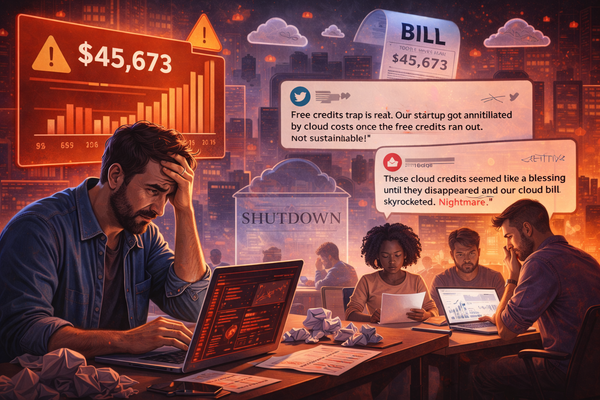
One of the most damaging red flags is tool-driven decision-making. In 2025, many SMEs locked themselves into expensive per-seat SaaS ecosystems because their MSP standardized on a single vendor stack. As teams grew, monthly bills ballooned, even though actual usage remained low. When budgets tightened, these companies discovered they had no easy way to decouple or optimize.
Another common issue is hidden vendor lock-in. Several startups affected by ransomware incidents last year found themselves unable to restore systems quickly because their MSP relied on proprietary backup solutions that required the provider’s direct involvement to recover data. In some cases, response delays extended outages from hours to days.
Reactive support models are another silent killer. In one widely discussed 2025 incident, a mid-sized e-commerce company experienced repeated downtime during peak sales periods. Post-incident analysis revealed no proactive monitoring, no capacity planning, and no alerting beyond basic uptime checks. Tickets were resolved but root causes were never addressed.
The pattern is clear:
If an MSP only reacts, the business absorbs the risk.
What Real MSP Partnerships Look Like in Practice
A real MSP partnership is defined less by tools and more by decision-making discipline.
In contrast to the failures above, companies that navigated 2025’s disruptions successfully shared a few traits. Their MSPs had designed systems with clear failure boundaries. They knew what would happen if a region went down. Backups were tested, not assumed. Costs were visible and regularly reviewed.
These MSPs did not chase every new platform trend. Instead, they favored proven, open technologies, simple architectures early on, and incremental evolution as demand grew. When issues occurred, communication was clear because the systems were understandable.
Perhaps most importantly, these MSPs treated documentation and transparency as part of the service. Founders were not shielded from reality they were informed enough to make decisions quickly.
That is the difference between a vendor and a partner.
The Questions Founders Should Be Asking (Based on 2025 Failures)
After the incidents of 2025, smarter founders started asking different questions not about features, but about consequences.
They asked how cloud costs behave under growth, not just what the monthly estimate looks like today. They asked how recovery actually works during an outage, not whether backups “exist.” They asked how identity, access, and credentials are managed after seeing how many breaches began with compromised admin accounts.
Crucially, they asked what happens if the relationship ends. In nearly every public failure last year, businesses that suffered the most were those who did not fully understand their own systems.
A good MSP expects these questions and welcomes them.
DOHTECH SOLUTIONS’ MSP Engagement Philosophy
DOHTECH SOLUTIONS was built around a simple belief shaped by enterprise experience:
technology should compound value, not complexity.
Our engagement model starts with discovery, not deployment. We assess business workflows, growth expectations, regulatory exposure, and existing technical debt before recommending anything.
Where possible, we adopt open-source technologies that reduce licensing overhead, eliminate artificial constraints, and give businesses long-term flexibility. This is not about cutting corners it’s about avoiding unnecessary cost structures that hurt SMEs as they scale.
Our cloud approach is intentional. We design for resilience without assuming hyperscale patterns are always appropriate. Systems are observable, documented, and designed to fail predictably.
Most importantly, we operate transparently. Clients understand their architecture, their costs, and their risks. Our goal is not dependency it’s trust built through clarity and reliability.
Final Thought: The Best MSPs Are Invisible Until They’re Needed
In every major 2025 outage or security incident, the difference between disruption and disaster came down to preparation.
The right MSP doesn’t promise that nothing will ever go wrong. They ensure that when something does go wrong, the business remains in control.
Choosing an MSP in 2026 is not about buying IT support. It’s about selecting a partner who understands scale, failure, cost, and long-term sustainability.